Challenges in the Classroom
I wrote this blog post in November 2024 during my Fulbright Grant in Cameroon.

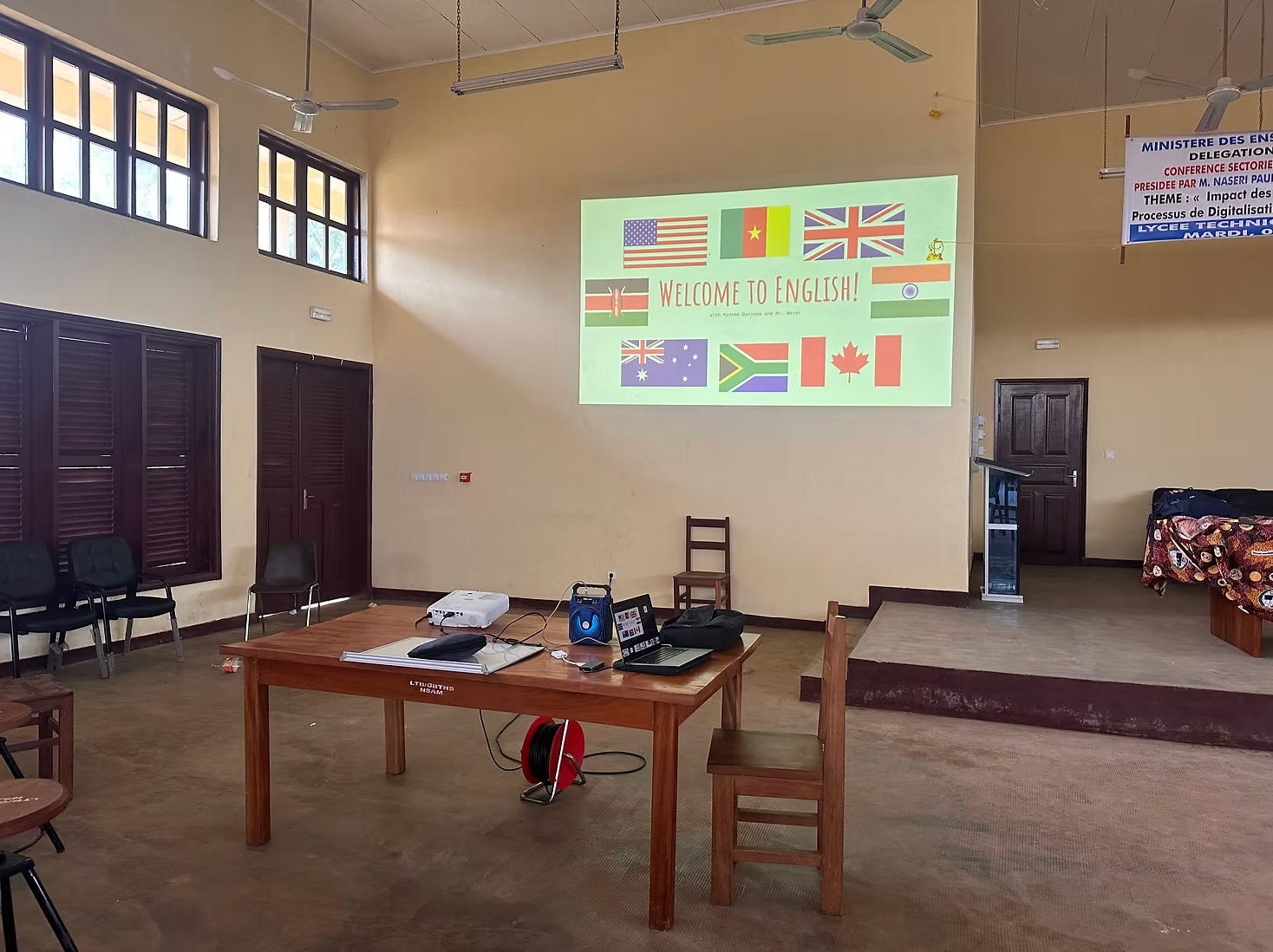
At school, I’ve been running into some significant challenges that make teaching a bit more difficult. The electricity situation, for one, is challenging. There’s only power in one building, which complicates any digital lessons I plan to do with a projector.
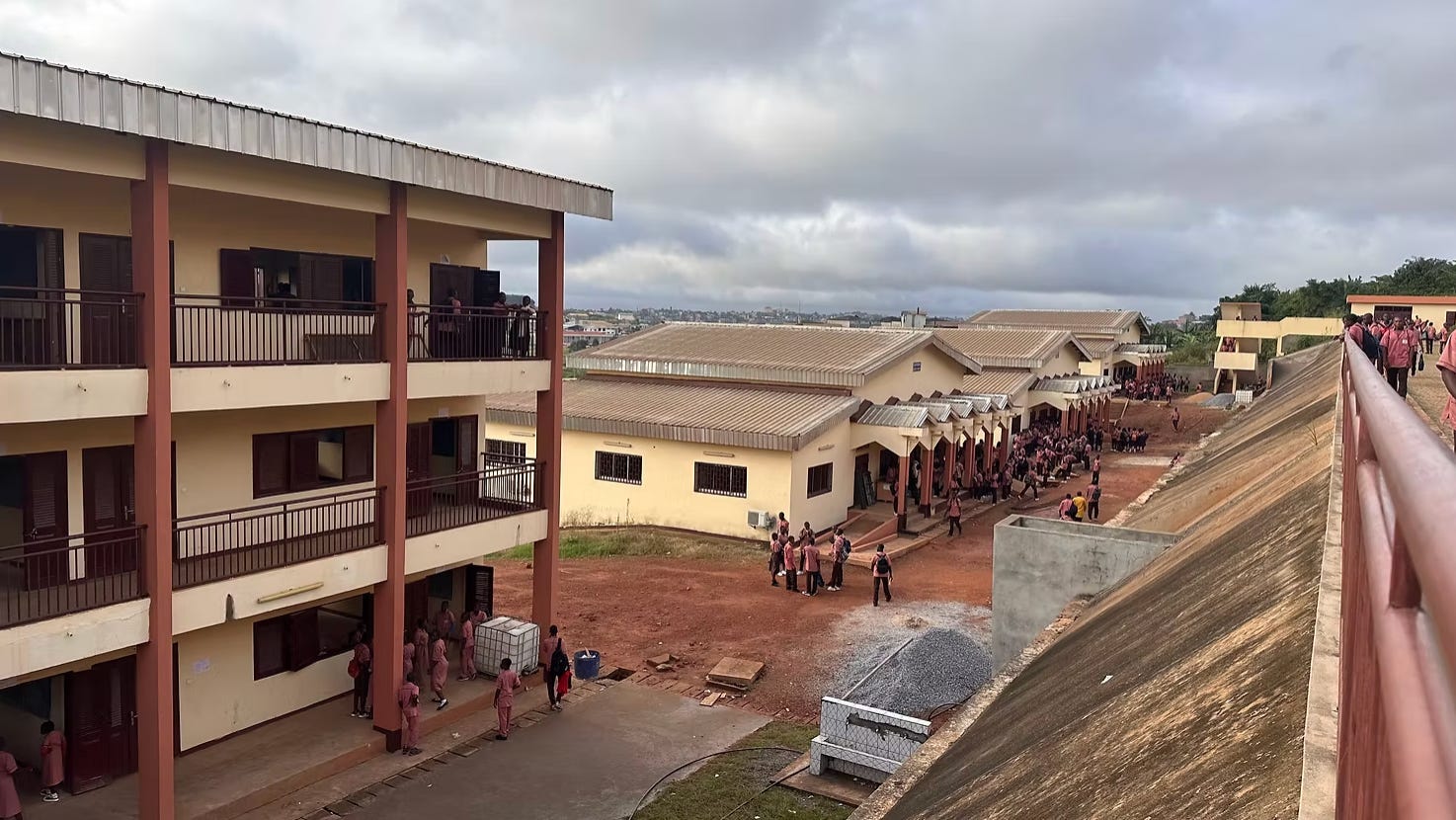
Since the school grounds cover about 10 acres, I have to fetch the students before we head over to the digital room, which takes a lot of time. There’s no efficient way to let students know in advance that we’ll be using the digital room (and even when we remind them the week before, they often forget).
Another issue is the lack of consistent communication. Sometimes, teachers aren’t informed about meetings happening in the digital room until the last minute. On top of this, there’s no internet, so any presentations or videos have to be fully downloaded beforehand. And even when I’ve prepared everything in advance, the electricity in the digital room is unreliable; the projector has turned off mid-lesson more than once due to power cuts or unstable currents. T
hese challenges make planning digital lessons tricky, and some days we have to adapt and revert to teaching on the blackboard as usual. Other days, I carry around my laptop, doing my best to let every student see the screen.
Despite these obstacles, I’m committed to finding ways to create interactive and digital lessons this year and to work with the other teachers on integrating more technology in the classroom.
However, we face additional hurdles, as many teachers don’t have laptops or computers at home and aren’t familiar with tools like Google Slides or PowerPoint. Given these challenges, I wonder about the government’s plan for 50% of lessons to be digitalized.
Most of the time, my lessons aren’t digital. I’m learning to adapt to teaching with very limited resources—essentially just a blackboard and chalk. Most students don’t have textbooks or other materials, only a notebook. If I want to print something for students, I have to pay out of pocket for vendors who come to the school with printers. It’s made me realize just how privileged schools in the US and other places in the world are to have access to so many of these basic resources.
Seeing these realities has helped me understand why some teachers resort to lecturing and writing notes on the board. Students need something to write down to study, and without projectors or printed materials, teachers here have limited ways to make lessons interactive. In the US, with resources like projectors and printed handouts, teachers have more freedom and time to engage students in creative ways.
Despite these challenges, I’ve enjoyed finding ways to get students engaged and help them see the bigger picture of why they’re learning English. I always make an effort to incorporate a game or activity to keep things fun.
Last Thursday was especially exciting: a visitor from New York who runs the YES Abroad high school exchange program with African nations, along with some embassy personnel, came to visit the school. I got to show them around and introduce them to my students. I think it was an eye-opening moment for many of the students—they saw that studying in the US might actually be within reach and could open doors to experiencing life in a completely new place.
As for my classes, I’m currently teaching a mix of Anglophone and Francophone students with three different teachers throughout the week.
Recently, I picked up a new section of Lower 6th (11th grade) Anglophone students, which has been quite enjoyable. Since they don’t have a set syllabus, I have a lot of freedom in what we cover. We’ve been reading articles on current events like Indigenous Peoples’ Day/Columbus Day, Halloween, and the US election. The class has mostly focused on writing, which seems to be their weakest area.
In Cameroonian classrooms, teachers often prepare students for test-writing, but actual practice and revision are rare. To build their skills, I have them write for 15 minutes at the beginning of each class in response to a prompt. We’ve been working on note-taking skills and summary writing, using the articles as the basis.